A tankless water heater does away with the storage tank. It heats water as it flows, which changes how it behaves, what it needs and what it costs. This overview covers the basics.
A tankless water heater heats water on demand with a gas burner or electric elements as it passes through a heat exchanger. It supplies hot water continuously up to its flow limit, takes little space and can last longer than a tank. It needs the right gas line or electrical supply, venting, a drain and regular descaling, and it costs more to install.
- Continuous hot water, within the unit's flow capacity.
- Wall-mounted, so it frees floor space.
- Gas models burn a lot of gas at once, so the line must be big enough.
- Hard water scales the heat exchanger. Flush it regularly.
- Sizing by flow rate and temperature rise is what prevents complaints.
How it works
When you open a hot tap, flow sensors tell the unit to fire. Water passes through a heat exchanger, is heated to the set temperature and leaves for the tap. Close the tap and the unit stops.
What it offers
- Hot water without waiting for a tank to refill
- No standby heat loss from stored water
- A smaller footprint
- A long service life with maintenance
- No tank to rust through and flood a closet
What it needs
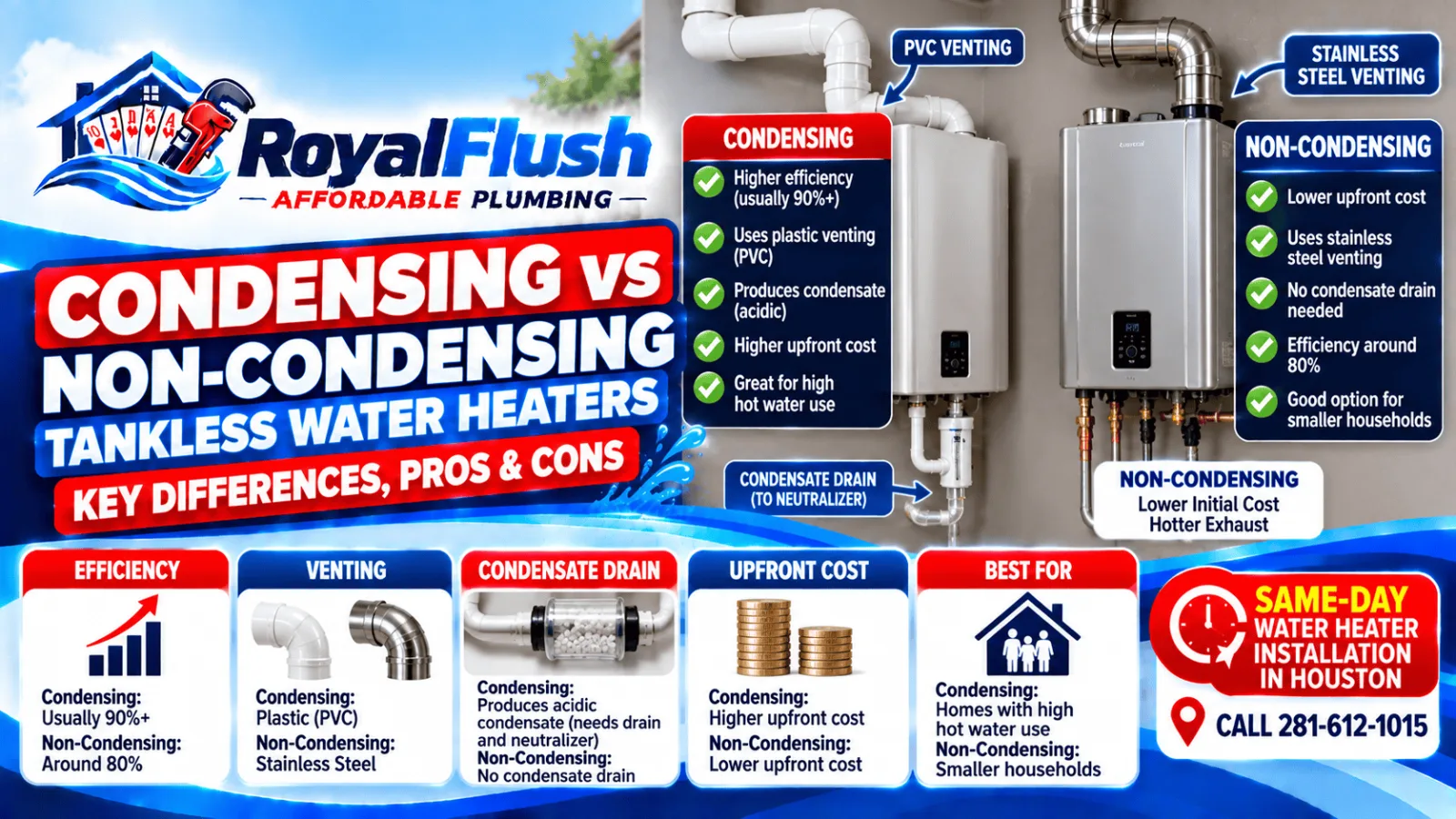
- A gas line sized for the burner, or an electrical supply that can carry the load. See gas line installation.
- Venting to the outside for gas units.
- A condensate drain for condensing models.
- Isolation valves so that it can be flushed.
- Power for controls, even on a gas unit.
Sizing
A tankless unit is rated by how many gallons per minute it can heat by a given rise in temperature. A household with several showers, a dishwasher and a laundry running at once needs more capacity than one with a single bathroom. A plumber adds up your peak demand.
Maintenance
Flush the heat exchanger on the manufacturer's schedule, more often in hard water, and clean the inlet filter. A softener helps. See water softener installation.
Who it suits
Households that value space, plan to stay for years and have the gas and venting needed. A small household with a tight budget and no gas upgrade planned may do well with a tank. See our comparison of tank or tankless, and our tankless installation and tankless repair pages.
Frequently asked questions
Do tankless heaters need maintenance?
Yes, an annual flush and a filter clean, more often in hard water.
Can I use hot water if the power goes out?
Most units need power for controls, so no, unless they have a backup.
How long do they last?
Often longer than tank heaters, with maintenance.
Is a bigger gas line always needed?
Often. The unit burns more gas at once.
Can it supply two showers at once?
If it is sized for it.

Licensed Houston plumbers since 2007. Residential, commercial and industrial plumbing. Upfront pricing, no hidden charges.