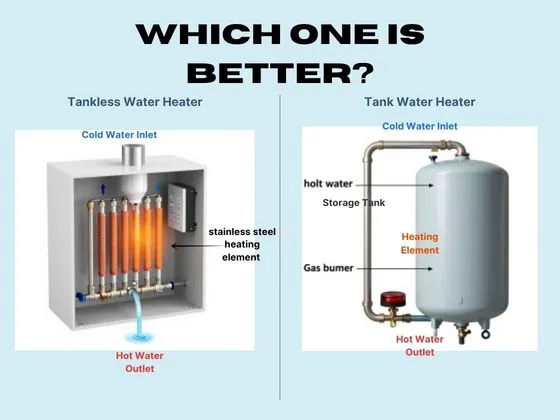
Choosing a tank or tankless water heater depends on your household’s hot water needs, budget, available space, and long-term energy goals. Both systems provide reliable hot water, but they differ in installation costs, energy efficiency, lifespan, and maintenance requirements. A tank water heater stores hot water for immediate use, while a tankless system heats water only when needed. Understanding these differences can help you avoid unnecessary expenses and ensure your home always has enough hot water.
This guide explains the tank or tankless water heater decision in simple terms, making it easier to choose the best option for your Houston home.
Tank or Tankless Water Heater- What's the difference
The price difference between a tank and tankless water heater.
Which Water Heater Saves More Money Over Time?
Which Lasts Longer, a Tank or Tankless Water Heater?
How Does Houston’s Hard Water Affect Tankless Water Heaters?
What Sized Water Heater is usually recommended
Household size is one of the biggest factors when deciding between a tank or tankless water heater. Choosing the right size is just as important as selecting the right system. A couple or a family of two or three will usually do well with a 40-gallon tank water heater or a mid-sized tankless unit.
For families of four or five, a 50-gallon tank is often the better fit. Likewise, a properly sized tankless water heater with a higher flow rate can provide enough hot water for daily needs.
However, proper sizing is essential. Many complaints about tankless systems happen because the unit is too small. If your tank or tankless water heater is undersized, you may run into problems when using multiple fixtures at the same time, such as the dishwasher, washing machine, and showers.
Still Deciding Between a Tank or Tankless Water Heater? Let Royal Flush Affordable Plumbing Make It Easy For You.
Choosing the right water heater isn’t just about upfront cost — it’s about matching the system to your home, your water usage, and Houston’s notoriously hard water. That’s where a quick call to Royal Flush Affordable Plumbing pays off.
Why Homeowners Trust Royal Flush for Water Heater Installation
Whether you’re leaning toward the lower upfront cost of a tank system or the long-term efficiency of going tankless, our licensed Houston plumbers help you cut through the guesswork. We evaluate your household size, daily hot water demand, and space constraints — then recommend a properly sized unit so you’re never caught short during back-to-back showers and laundry loads.
Built for Houston’s Hard Water
Harris County’s hard water is tough on tankless heat exchangers, causing mineral scale buildup that quietly reduces efficiency and shortens lifespan. Our team offers annual flushing and maintenance service to keep your tankless unit running at peak performance for the full 15–20 year lifespan it’s built for — protecting your investment instead of letting it fail early.
What You Get With Royal Flush Affordable Plumbing:
- Free in-home consultation to determine tank vs. tankless fit
- Transparent, upfront pricing on installation — no surprise labor fees
- Licensed handling of gas line upgrades or electrical panel work for tankless installs
- Annual maintenance plans to combat Houston’s hard water damage
- Same-day and emergency service, 24/7 Sunday–Friday
Don’t Let Guesswork Cost You Money
A water heater is a 10-to-20-year decision. Get it right the first time with a team that knows Houston’s water, homes, and hot water demands inside and out.
📞 Call 281-612-1015 or book an appointment online for your free water heater consultation.