Most people compare water heaters by price and warranty. Those matter, but the choices that decide whether the heater runs well for fifteen years are quieter: the size, the fuel, where it goes and how it is installed.
When buying a water heater, decide the fuel (gas or electric), the type (tank or tankless), the size for your household, and where it will sit, including venting, a drain pan, a relief valve and discharge pipe, an expansion tank where needed, and access for service. Installation quality matters as much as the unit, so ask what is included before comparing prices.
- Size by how much hot water you use at the busiest hour, not by house size.
- Gas needs venting and a correctly sized gas line. Electric needs the right circuit.
- A drain pan and relief pipe are not optional above living space.
- The cheapest quote often leaves out the parts that make it safe.
- Plan for service: a flush valve, isolation valves and room to work.
Fuel and type
- Gas tank: quick recovery and lower running cost where gas is available, with venting and a gas connection.
- Electric tank: simpler venting and installation, slower recovery, a dedicated circuit.
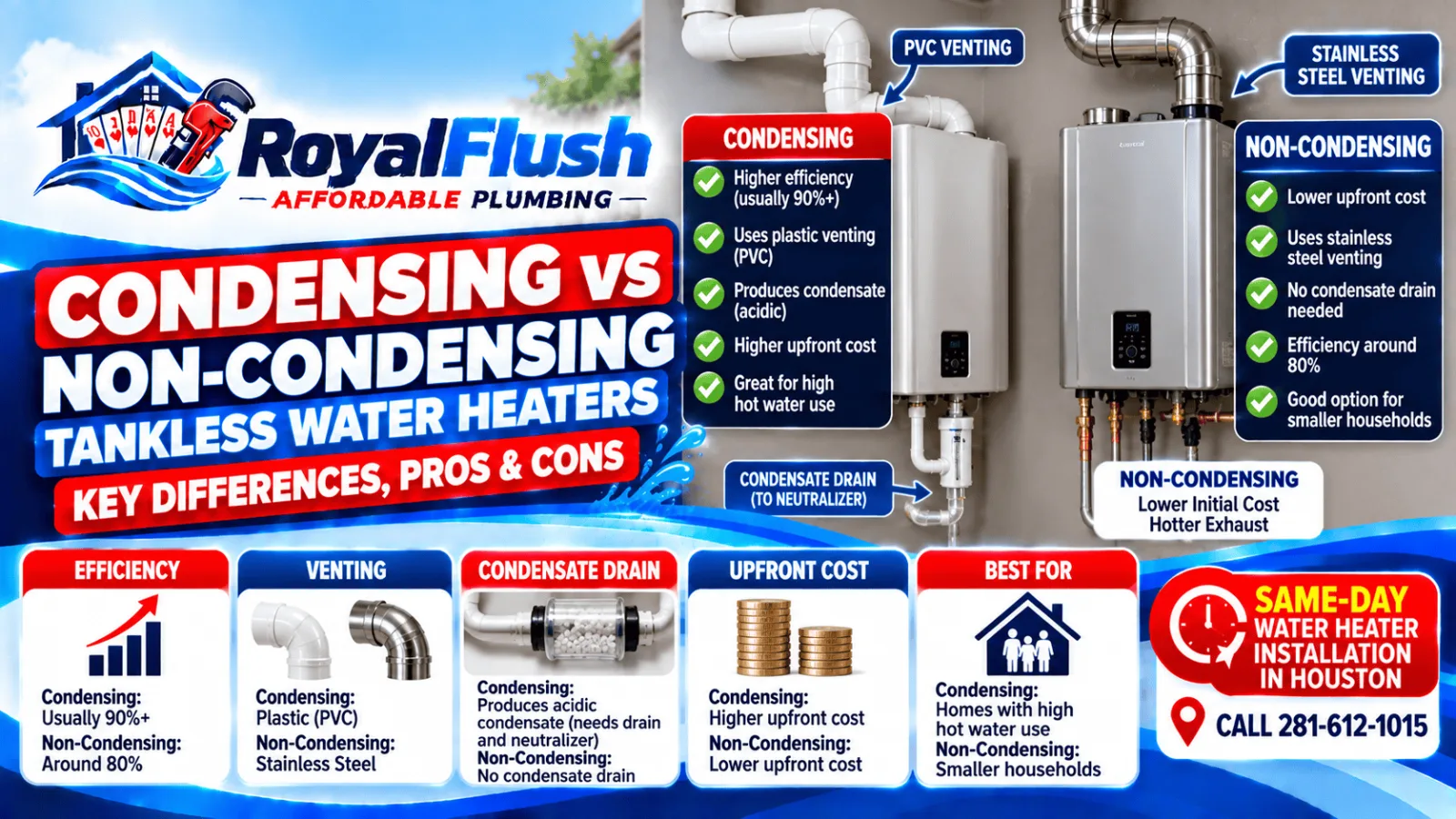
- Tankless: continuous hot water and a smaller footprint, with a higher installed cost, venting and a larger gas line. See our guide to tank or tankless.
Size
Tank sizes are judged by the first-hour rating, which is how much hot water the unit can deliver in an hour starting full. Count the number of people, bathrooms and heavy users. A household with several showers in the morning needs more than the same house on a quiet schedule. A plumber can help you choose.
Where it goes
- Attics: need a drain pan, a drain line and good access. A leak ruins a ceiling.
- Garages: keep flammable products away, and check that the unit is protected from vehicle damage.
- Closets: need clearance, ventilation for gas units and a floor drain or a pan.
What should come with the installation
- A new relief valve and a correctly routed discharge pipe
- A drain pan and a drain line where a leak could do damage
- New connectors and shutoff valves, including a gas shutoff on gas units
- An expansion tank where the system calls for one
- Proper venting and clearances
- A permit where required, and a test before the plumber leaves
Houston considerations
Hard water speeds up scale, so a softener or an annual flush helps. Attic installations are common, so drain pans matter. After flooding, appliances that were wet should be checked before use.
Questions to ask
- What is included in the price?
- What size do you recommend, and why?
- What will you do about the old unit?
- Is a permit required, and who arranges it?
- Will I get a written work order and invoice?
See our water heater experts page and water heater installation.
Frequently asked questions
How long does a water heater last?
Many tank heaters last about a decade, give or take, depending on water quality and maintenance.
Is bigger always better?
No. An oversized tank costs more to run, and an undersized one runs out.
Do I need an expansion tank?
In many homes with a closed system, yes. A plumber can check.
Is a permit needed to replace a water heater?
Often. The rules depend on your city or county.
Gas or electric?
It depends on what you have, the cost of each and your household's use.

Licensed Houston plumbers since 2007. Residential, commercial and industrial plumbing. Upfront pricing, no hidden charges.