People call a plumber for a leak or a clog, but the work in a home is wider than that. Knowing the range helps you ask for the right thing and understand what a visit involves.
A residential plumber repairs and installs the pipes and fixtures that bring water into a home and take waste out: faucets, toilets, water heaters, drains, sewer lines, gas piping, appliance connections and shutoffs. They diagnose leaks and clogs, replace worn parts, install new fixtures and appliances, test the work and advise on what needs attention before it fails.
- Plumbing covers supply, drains, venting, heating water and gas piping.
- Most calls are repairs, installations and clogs. Some are emergencies.
- A good visit starts with questions and ends with a test.
- Preventive checks find problems before they flood a room.
- Some work needs a permit, and the plumber should say so.
The main kinds of work
- Repairs: leaking faucets and pipes, running toilets, failed valves, low pressure.
- Drain work: clogs, slow drains, sewer backups, cleaning and camera inspection.
- Water heaters: repair, replacement, and tank or tankless installation.
- Fixtures and appliances: sinks, faucets, toilets, showers, dishwashers, washing machines and disposals.
- Pipe work: replacing sections, leak detection, repiping.
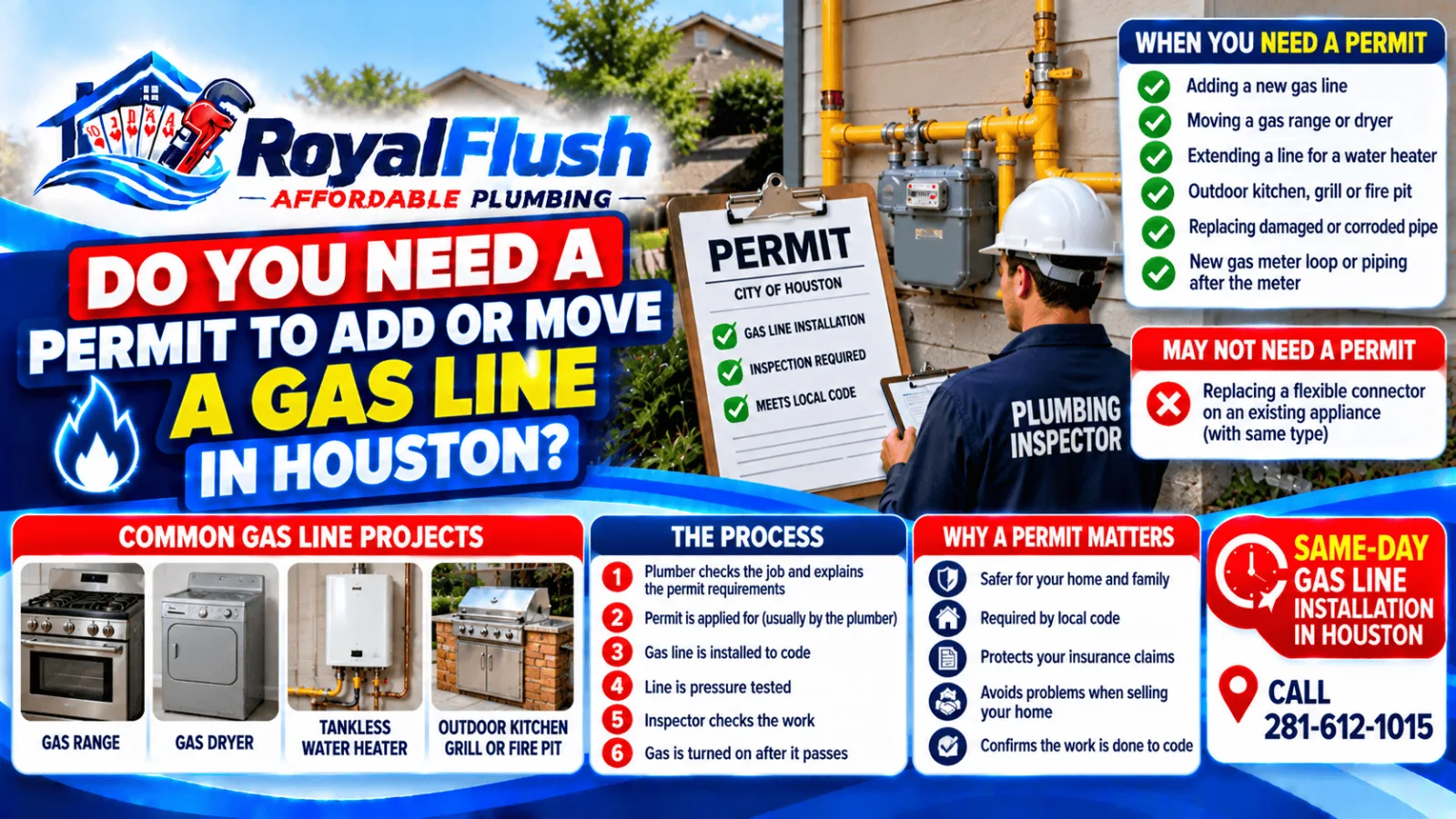
- Gas piping: lines, shutoffs and connections for gas appliances.
- Inspections: checking an old house, or a sale.
See our plumbing services for the full list.
How a typical visit goes
- You describe the problem, and the plumber asks when it started and what changes it.
- They look at the fixture and the system around it.
- They explain what they found and what the options are, with prices.
- You decide, and they do the work.
- They test it, tidy up and explain what was done.
- You get a written work order and invoice.
What helps the visit go well
- Clear access to the fixture, and a path for the plumber
- A note of when the problem started
- Photos of anything intermittent
- The age of the water heater, if that is the issue
- Knowing where your main shutoff is
Questions you can ask
- What do you think caused it?
- Is it a repair or a replacement, and what is the price of each?
- Will it need a permit?
- What should I watch for afterwards?
Our work is done under Texas Responsible Master Plumber License RMPL #42403.
Frequently asked questions
What is the difference between a plumber and a handyman?
Plumbers are licensed to work on water, drain and gas piping and carry out permitted work. Handymen do general repairs.
Do plumbers do gas work?
Licensed plumbers can do gas piping within their license. Ask about the specific job.
Should I fix small leaks myself?
Simple fixes such as a washer or a flapper are fine. Leaks inside walls, at the water heater or on gas lines need a plumber.
How do I prepare for a visit?
Clear access, a list of symptoms, and the main shutoff location.
Is an estimate free?
We give free estimates. Other companies differ, so ask before any visit.

Licensed Houston plumbers since 2007. Residential, commercial and industrial plumbing. Upfront pricing, no hidden charges.