When the hot water stops, people search for the same thing: who fixes this? Is it a plumber, an appliance repair company, an electrician, or the HVAC company that services the furnace? It is a fair question, because a water heater sits where several trades meet. It has water connections, a gas line or a power supply, a flue, a drain, and a safety valve, and most of those belong to plumbing.
Yes. Licensed plumbers repair and replace water heaters, including gas tank heaters, electric tank heaters and tankless units. The work includes the heater itself and everything it connects to: the cold and hot water lines, the gas supply and connector, the vent, the temperature and pressure relief valve and its discharge pipe, the drain pan, and the expansion tank where one is needed. An electrician is needed only for problems in the electrical supply to the home, such as the breaker or the wiring. In Texas, installing or replacing a water heater is plumbing work, and many cities require a permit for it, so check what your city asks for.
- A plumber covers the heater, the water connections, the gas supply and venting, the safety valve, and the drain.
- Leaks, no hot water, a pilot that will not stay lit, a tripping element and strange noises are all ordinary plumbing calls.
- An electrician is for a problem upstream of the heater, such as a dead circuit. A plumber replaces the heater's own thermostat or element.
- A gas heater has extra safety points: the connector, the venting and combustion air. Those should be done by a licensed plumber.
- Replacement is more than swapping a tank. The valves, the drain pan, the venting and the permit are part of the job.
- A smell of gas is an emergency. Leave and call 911 or the gas utility first.
Who fixes what
| Problem | Who handles it | Why |
|---|---|---|
| Water heater leaking from the tank or fittings | Plumber | Plumbing connections, the tank and the relief valve |
| No hot water on a gas heater, pilot out | Plumber | Gas control, thermocouple, burner and venting |
| No hot water on an electric heater | Plumber, or an electrician if the circuit is dead | Elements and thermostats are part of the heater; the breaker and wiring belong to the electrical system |
| Rumbling, popping, rusty or smelly water | Plumber | Sediment, corrosion, and the anode rod |
| Relief valve dripping | Plumber | It is a plumbing safety device |
| Replacing a tank heater | Plumber | Water, gas, venting and permit work |
| Installing a tankless heater | Plumber | Gas sizing, venting, water connections, and sometimes electrical coordination |
| Tripped breaker for the heater circuit | Electrician | The circuit, not the heater |
| Furnace or air conditioner problems | HVAC company | Different equipment |
HVAC companies do sometimes install water heaters, especially when the heater sits in an attic or a closet near the furnace. The water and gas connections are still plumbing work, and a licensed plumber is the right person for them.
What a plumber repairs on a tank heater
Most repairs are small parts, and a repair is often the cheaper and more sensible answer for a heater that is not near the end of its life:
- Gas heaters: the thermocouple, the pilot assembly, the gas control valve, the burner, and the flue connection.
- Electric heaters: the upper and lower heating elements and the thermostats, the high-limit reset, and the wiring inside the heater.
- Safety and plumbing parts: the temperature and pressure relief valve, the discharge pipe, the drain valve, the supply connections and the shutoff valves.
- Maintenance: flushing the tank to remove sediment, and checking or replacing the anode rod, which protects the tank from corrosion.
- Leaks: finding where the water is really coming from, which may be a fitting, a valve or a failed tank.
A leak from the tank body itself usually cannot be repaired. Water around the base can also come from a fitting above, which is why it is worth having it checked before assuming the tank is finished. Our page on a leaking water heater covers how to tell the difference.
What a plumber handles on a tankless heater
A tankless heater heats water as it flows, so it has more going on inside, and its problems are different from a tank's:
- Scale buildup in the heat exchanger, which is common in hard water and is cleared by descaling the unit.
- Error codes from the control board, flame sensors, or igniters.
- Water flow and pressure problems at the inlet filter or the fixtures.
- Venting and combustion air, which matter more with a sealed-combustion or condensing unit.
- Gas supply that is too small for the unit.
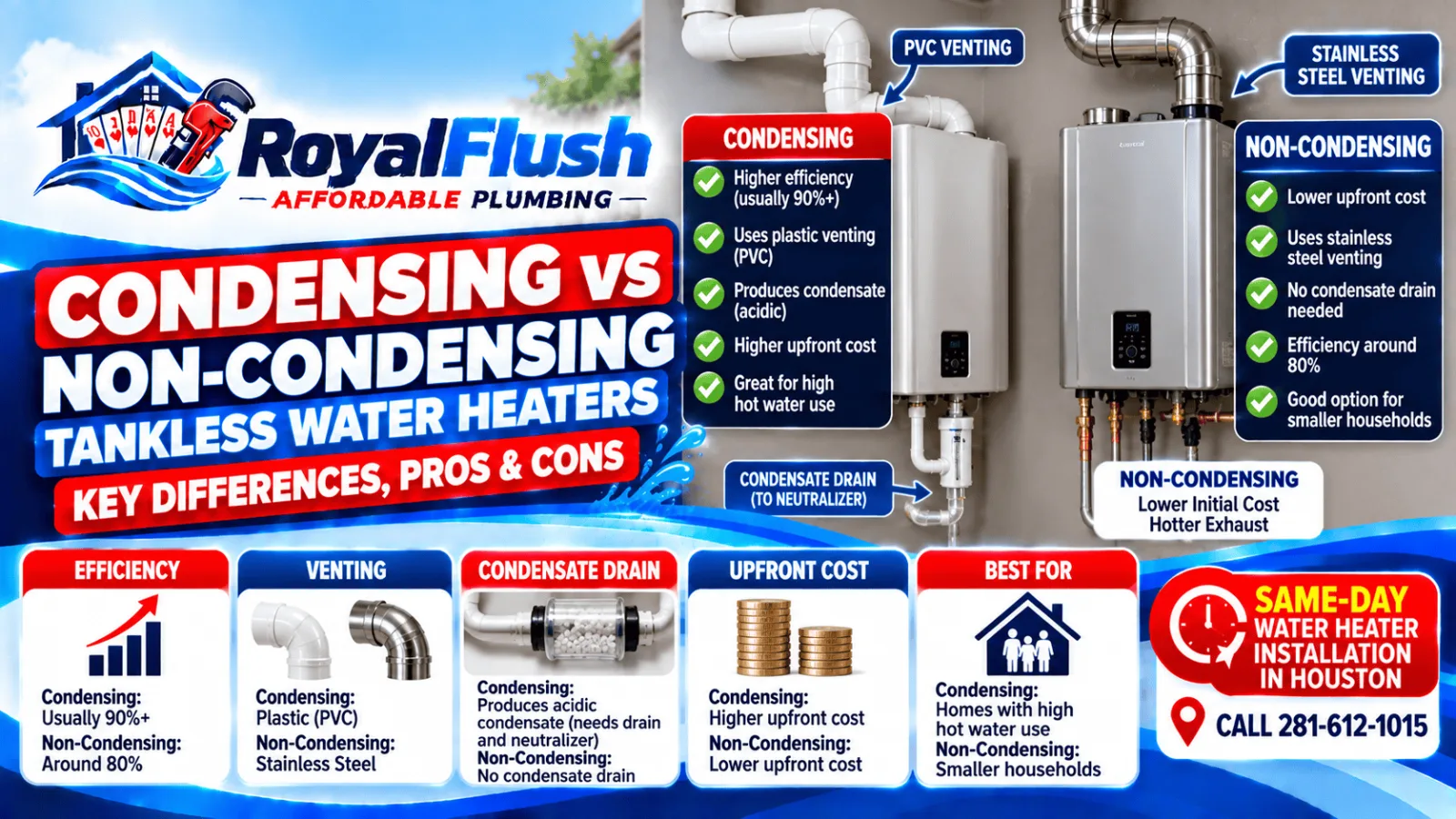
We compare the main kinds of tankless units in our guide to condensing and non-condensing tankless water heaters, and the repair side is covered on our tankless water heater repair page.
What a replacement actually includes
A new heater is not just a new tank. A full replacement usually covers:
- Shutting off and draining the old unit, and removing it.
- Setting the new heater on a pan with a drain where the location calls for it.
- New water connections and shutoff valves, and a connector sized for the heater.
- For gas: a new flexible connector, a gas shutoff, and a leak test of the joints. If the old heater was connected differently or the supply is too small, the gas line may need work.
- The vent: checking that the flue is the right size, rises correctly and is connected, so combustion gases leave the house.
- A temperature and pressure relief valve with a correct discharge pipe.
- An expansion tank where the plumbing is a closed system, which is common when there is a pressure reducing valve or a backflow device on the supply.
- Testing, setting the temperature, and cleaning up. If your city requires a permit and an inspection, that happens as part of the job.
This is the part that makes installation a licensed trade. A heater that is connected wrongly or vented badly can leak, produce carbon monoxide or fail early, and none of that is visible once the closet door is shut. Our water heater installation and water heater replacement pages describe how a replacement goes.
Gas and electric: what changes
A gas heater adds three things that an electric one does not have: a gas supply, a burner, and a flue. That means a gas connector that has to be sound, a vent that must carry exhaust out of the building, and air for combustion. In a garage, flammable vapors are a concern too. We explain the safety side in can a water heater explode.
An electric heater is simpler to vent, but it needs a circuit of the right size and a safe connection to it. The elements and thermostats wear out, and a tripped breaker is not always a heater problem. If the breaker trips again right after resetting, stop resetting it and call.
If your heater runs on gas and the home has a gas appliance that was connected without a proper shutoff, our gas appliance hookup and gas line repair pages cover those connections.
Can I do it myself?
Some homeowners flush a tank, check the temperature setting or test whether a breaker has tripped, and those are reasonable. Replacing a heater, changing a gas connection or working on a relief valve is another matter. Texas allows limited work by an owner on their own home, but permit and code rules still apply, and the work has to pass the same standards as a licensed installation. Beyond the legal side, the risk is real: gas leaks, scalding water, carbon monoxide and water damage are all possible when something is connected wrongly. A heater that is still covered by the manufacturer may also have installation requirements, and a record that a licensed plumber did the work is worth having.
What to ask before a plumber starts
- Is the plumber licensed and insured, and what is the license number?
- Will the job include a permit if my city requires one?
- What will be replaced besides the tank: the connector, valves, pan, expansion tank, vent?
- What is the price, and is it agreed before work starts?
- How will the old heater be removed?
Royal Flush Affordable Plumbing is licensed and insured, and works under Texas Responsible Master Plumber License RMPL #42403. If you are not sure whether a repair or a replacement makes sense, we say so plainly and let you decide.
Frequently asked questions
Do plumbers install water heaters?
Yes. Installing and replacing water heaters is plumbing work, because it involves the water supply, the gas supply, the vent and the safety valve. Many cities also require a permit for it.
Should I call a plumber or an appliance repair company?
For a water heater, call a plumber. Appliance repair companies usually work on kitchen and laundry equipment, and the water, gas and venting connections of a heater are plumbing work.
Who fixes an electric water heater that has no hot water?
A plumber can test and replace the heating elements and thermostats. If the breaker or the wiring to the heater is the problem, an electrician is needed for that part.
Is it worth repairing an old water heater?
It depends on the age, the condition of the tank, and what failed. A small part on an otherwise sound heater is often worth fixing. A heater with a leaking tank, heavy rust or repeated failures is usually near the end of its life.
Does a plumber also handle the gas line to the heater?
Yes. A licensed plumber handles the gas connector, the shutoff valve and the pipe to the heater, and tests for leaks. If you smell gas, leave the house and call 911 or the gas utility from outside.
How long does a replacement take?
It depends on the heater, the access and whether the gas line, venting or valves need work. A standard replacement is often completed in a single visit when nothing else needs correcting. The plumber can tell you after seeing the installation.
Do I need a permit to replace a water heater?
Many Texas cities require one, and the rules differ by city. A licensed plumber knows what the local office asks for and handles it as part of the job.

Licensed Houston plumbers since 2007. Residential, commercial and industrial plumbing, 24 hours a day, with upfront pricing and no hidden charges.